The next time you pick up a product in a store, flip it over and look at the barcode. The first three digits of that barcode are not random. They are a GS1 prefix — a code that tells you which country's GS1 office issued the brand's barcode. Our free GS1 Prefix Lookup tool turns those three digits into a country name in milliseconds.
This guide explains what a GS1 prefix is, why it matters, how the system works across more than 250 country ranges, and — importantly — what the prefix does not tell you. We will look up four real barcodes: a jar of Nutella, a bottle of Coca-Cola, a Chinese-made product, and a paperback book. By the end you will be able to read the first three digits of any barcode and know what they mean.
What Is a GS1 Prefix?
A GS1 prefix is the first three digits of an EAN-13, EAN-8, or GTIN-14 barcode. GS1 is the global non-profit organization that manages barcode standards. It has member offices in more than 100 countries. When a brand wants barcodes for its products, it pays its local GS1 office an annual fee and receives a unique company prefix. That company prefix begins with a three-digit country code that points back to the GS1 office that issued it.
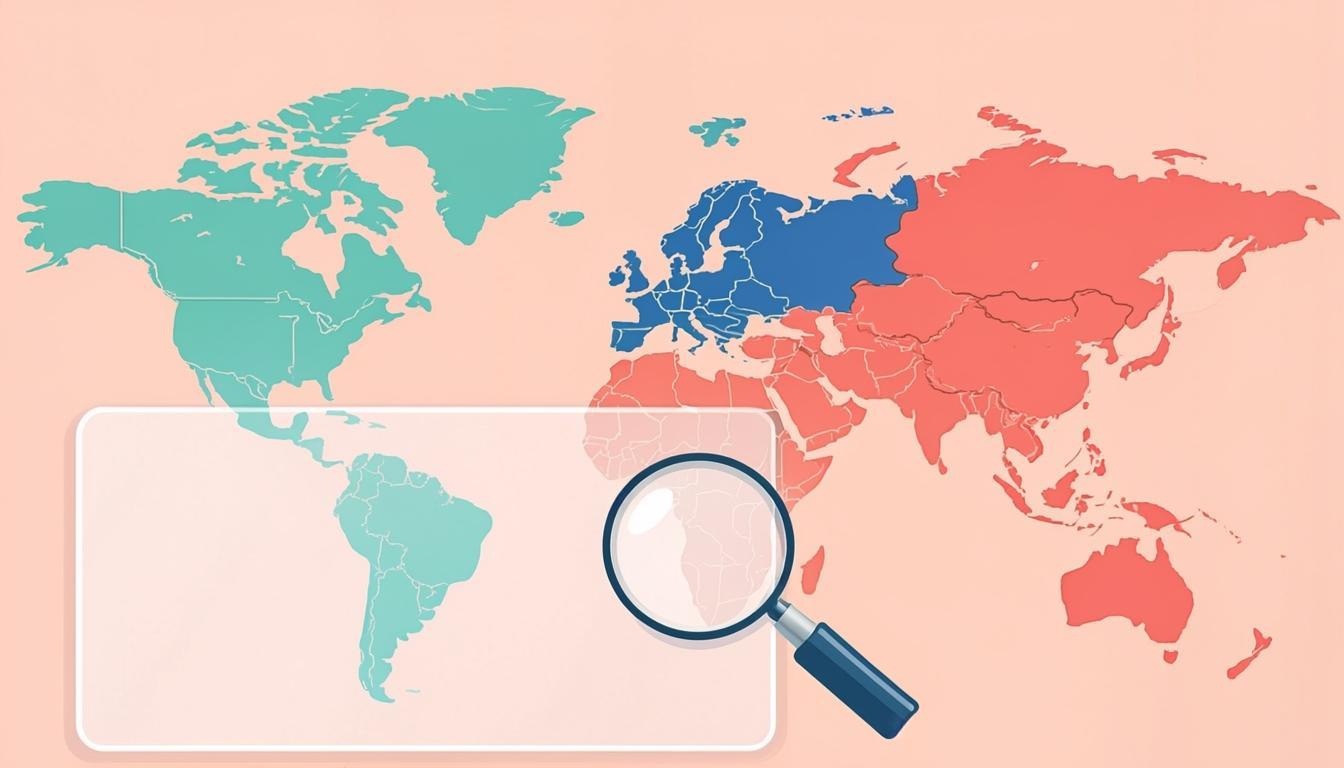
For example, all GS1 prefixes from 300 to 379 belong to GS1 France. All prefixes from 000 to 139 belong to GS1 US. All prefixes from 690 to 699 belong to GS1 China. The mapping is public and maintained by GS1 International. There are roughly 250 distinct prefix ranges covering every country that has a GS1 member organization.
Two special prefixes are reserved for the book and magazine worlds. 977 is reserved for serials (magazines, journals, newspapers) under the ISSN system. 978 and 979 are reserved for books under the ISBN-13 system — also called "Bookland" because the prefix treats all books as if they were a country.
Why Use Our Free GS1 Prefix Lookup?
You could look up a prefix on the official GS1 website, but their lookup is buried deep in their standards pages and only returns the country name. Our GS1 Prefix Lookup is faster, simpler, and gives you more useful information.
- Instant results: Type the first three digits and the country (or special-use category) appears immediately. No clicking through menus.
- Full 250+ range table: Every assigned prefix from 000 to 999 is in our database. No "not found" surprises.
- Shows the issuing GS1 office: Not just "Germany" — you also see "GS1 Germany" so you know exactly which organization issued the prefix.
- Flags restricted-use prefixes: Some prefixes (020-029, 200-299) are for in-store use only. Our tool tells you when a barcode is not a real brand code so you do not draw the wrong conclusion.
- Handles Bookland and Serials: Special prefixes 977, 978, and 979 are explained clearly so you know you are looking at a book or magazine, not a country.
- Works offline: Once the page loads, all lookups run in your browser. No server round-trip, no rate limit.
- 100% free and unlimited: Look up as many barcodes as you want. No signup, no cap, no ads.
If you also need to calculate or verify the last digit of a barcode, pair this lookup with our Check Digit Calculator or Barcode Validator.
How GS1 Prefix Lookup Works
The system is simple. Every barcode starts with three digits. Those three digits fall into a range that GS1 has assigned to a specific country or special-use category. The lookup tool just matches the prefix you type against the official table.
Standard country prefixes
Most three-digit prefixes map directly to a country. Here are some of the most common ones:
- 000-019: United States and Canada (GS1 US)
- 030-037: United States pharmaceuticals (GS1 US pharma)
- 300-379: France and Monaco (GS1 France)
- 400-440: Germany (GS1 Germany)
- 450-459: Japan (GS1 Japan)
- 460-469: Russia (GS1 RUS)
- 500-509: United Kingdom (GS1 UK)
- 540-549: Belgium and Luxembourg (GS1 Belgium)
- 690-699: China (GS1 China)
- 729: Israel (GS1 Israel)
- 730-739: Sweden (GS1 Sweden)
- 880: South Korea (GS1 Korea)
- 890: India (GS1 India)
- 930-939: Australia (GS1 Australia)
- 940-949: New Zealand (GS1 New Zealand)
Restricted-use prefixes
Some prefixes are deliberately not tied to a country. They are used internally by a single store for products the store packages itself — like fresh bread, sliced meat, or loose produce.
- 020-029 and 200-299: In-store numbers for variable-measure products. These are not unique to any brand and cannot be looked up.
- 040-049, 080-089, 092-094, 096-099: GS1 US restricted distribution. Used inside a single company's internal systems.
- 050-059 and 090-091, 095: Coupons. The prefix identifies a coupon, not a country.
Bookland and Serials prefixes
Three prefixes belong to the book and magazine worlds rather than to a country:
- 977: Serials — magazines, journals, newspapers under the ISSN system.
- 978: Books under the ISBN-13 system. Called "Bookland" because the ISBN system treats all books as a virtual country.
- 979: Books and sheet music. A second Bookland prefix added when the 978 range filled up.
Step-by-Step: Using the GS1 Prefix Lookup
- Open the tool: Go to the GS1 Prefix Lookup.
- Find the first three digits of your barcode: Look at the digits printed below the bars. The first three are your prefix.
- Type them into the lookup: The tool accepts three digits. If you paste a full 13-digit barcode, it grabs the first three automatically.
- Read the result: The country (or special-use category) and the issuing GS1 office appear instantly.
- Read the notes: If your prefix is restricted-use (in-store, coupon, Bookland), the tool flags it so you do not mistake it for a real country code.
- Look up multiple barcodes: The tool has no limit. Check every product in your shopping cart if you want.
If you also want to confirm the full barcode is valid (not just identify its country), run the full number through the Barcode Validator afterward.
Real-World Examples
Let us look up four real barcodes to see what the prefix tells us in practice.
Example 1 — Nutella (prefix 301)
The EAN-13 on a jar of Nutella starts with 301. Type 301 into the lookup. The result is France and Monaco, issued by GS1 France. This makes sense — Ferrero, the maker of Nutella, registered its barcodes in France. The jar may have been made in a different country, but the barcode is French.
Example 2 — Coca-Cola (prefix 540)
Many Coca-Cola bottles sold in Europe carry an EAN-13 starting with 540. The lookup shows Belgium and Luxembourg, issued by GS1 Belgium. The Coca-Cola Company registered its European barcodes through the Belgian GS1 office. The drink inside the bottle could be made anywhere — the prefix only tells you where the barcode was registered.
Example 3 — Chinese product (prefix 690)
A product made and registered in China typically starts with 690 (or any prefix from 690 to 699). The lookup shows China, issued by GS1 China. In this case the country of registration often does match the country of manufacture — but that is coincidence, not a rule.
Example 4 — Paperback book (prefix 978)
Pick up any paperback book published after 2007. The EAN-13 on the back starts with 978. Type 978 into the lookup. The result is Books / ISBN-13 (Bookland), issued by the International ISBN Agency. The next digits are the book's ISBN, and the last digit is a mod-10 check digit you can verify with our Check Digit Calculator.
Who Uses the GS1 Prefix Lookup?
The tool is useful for many different audiences.
- Curious shoppers: Ever wondered where a product's barcode was registered? Look it up in seconds.
- Customs and import officers: A quick prefix check helps spot suspicious paperwork. A product labeled "Made in Italy" with a Chinese prefix deserves a closer look — not because the prefix is wrong, but because it suggests the brand is registered in China.
- Retail buyers and category managers: When a new supplier hands you a sample, the prefix tells you which GS1 organization issued their barcodes. Useful when checking that a vendor's barcodes are legitimate.
- Brand protection teams: Counterfeit goods often use random or stolen prefixes. A quick lookup is a first-pass filter for spotting fakes.
- Librarians and booksellers: Books use 978 and 979. Magazines use 977. The lookup confirms whether an unknown barcode is a book, a magazine, or a retail product.
- Journalists and researchers: Tracing the country of registration for a product can be a useful data point in supply-chain reporting.
- E-commerce sellers: If you list products on Amazon, eBay, or Shopify, you sometimes need to verify that a GTIN is real. The prefix is your first clue.
If you need to scan a barcode to extract its number first, run it through the QR & Barcode Scanner on your phone.
Tips for Best Results
- Read the prefix from the printed digits, not the bars: The black bars are for scanners. The digits printed below them are for humans. Always read your prefix from the printed numbers.
- Use the first three digits only: The fourth digit onward is the company prefix and item reference, not part of the country code. Our tool grabs the first three automatically if you paste a full barcode.
- Treat restricted-use prefixes with care: If a barcode starts with 020-029 or 200-299, it is an in-store number. The "country" is the store itself, not a nation.
- Remember Bookland: Prefixes 977, 978, and 979 are not countries. They are book and magazine codes. The lookup will tell you so.
- Cross-check with the brand's website: A prefix only tells you where the barcode was registered. If you want the country of manufacture, check the brand's packaging or website.
- Pair with the validator: Use the Barcode Validator to confirm the full barcode is structurally valid. A real country prefix with a wrong check digit is still a broken barcode.
- Save the country for later: The lookup tool lets you copy the result. Build a small list of country codes for your product database if you are a reseller.
Common Mistakes to Avoid
- Assuming the prefix is the country of manufacture: This is the single biggest myth. The prefix tells you the country of registration, not of manufacture. A barcode with a US prefix (000-019) can belong to a product made in Vietnam. The brand is American; the factory is Vietnamese.
- Treating restricted-use prefixes as countries: Prefixes 020-029 and 200-299 are in-store numbers. They have no country. Calling them "United States" because they appear on US products is wrong.
- Forgetting that Bookland is not a country: Prefix 978 returns "Books / ISBN-13 (Bookland)" — not a country. A surprising number of online "barcode country lists" get this wrong.
- Believing the prefix tells you brand ownership: Coca-Cola's 540 prefix does not mean Coca-Cola is Belgian. It means Coca-Cola registered those barcodes through GS1 Belgium. Brand ownership and barcode registration can live in different countries.
- Using only the first digit: Some informal guides claim the first digit alone tells you the country. It does not. The first three digits together are the prefix.
- Trusting outdated prefix lists: GS1 occasionally adds new prefixes and reorganizes old ones. Our tool stays current with the official GS1 table.
- Believing a prefix proves authenticity: A real prefix only proves the prefix itself is valid. Counterfeiters can copy real barcodes. Pair the lookup with the Barcode Validator for a stronger check.
Frequently Asked Questions
Does the GS1 prefix tell me where a product was made?
No. The prefix tells you which country's GS1 office issued the barcode. The product can be manufactured anywhere. A US brand (prefix 000-019) may have its products made in China, Mexico, or anywhere else. The prefix is about the brand's registration country, not the factory.
What does the prefix 978 mean?
978 is the "Bookland" prefix. It marks the start of an ISBN-13 barcode — the kind printed on the back of every book published after 2007. The lookup returns "Books / ISBN-13 (Bookland)" because 978 is not a country; it is a special code reserved by the International ISBN Agency.
Are there any prefixes that are not assigned to a country?
Yes. Prefixes 020-029 and 200-299 are in-store numbers used by individual retailers for products they package themselves (fresh bread, deli meat, loose produce). Prefixes 977, 978, and 979 are reserved for magazines and books. Our tool flags these special cases so you do not confuse them with country codes.
How many GS1 prefixes are there?
There are roughly 250 distinct prefix ranges covering every assigned value from 000 to 999. Some prefixes are still reserved for future use, but the vast majority are assigned to specific countries or special uses.
Can I trust the prefix to spot counterfeit goods?
Only as a first-pass check. A counterfeit product often uses a copied barcode with a real prefix, so the prefix alone cannot prove a product is genuine. Pair the lookup with the Barcode Validator and check the brand's own authenticity tools (holograms, scratch codes, QR verification) for a stronger test.
Is the GS1 prefix lookup free?
Yes. The GS1 Prefix Lookup is 100% free, unlimited, and runs in your browser. No signup, no ads, no tracking, no daily cap.
Ready to Try the GS1 Prefix Lookup?
You now know what a GS1 prefix is, how it maps to roughly 250 country and special-use ranges, and — crucially — why the prefix is not the same as the country of manufacture. The fastest way to put this knowledge to work is to look up a barcode you have nearby.
Open the GS1 Prefix Lookup, type the first three digits of any product barcode, and get the country in milliseconds. To verify the full barcode is structurally valid, run it through the Barcode Validator. To calculate the last digit of a new barcode you are creating, use the Check Digit Calculator. And to generate a brand new barcode image, use the Barcode Generator.
Three digits, one country, zero guesswork. That is the power of the GS1 prefix — and now you have the tool to read it.